AI Agents Are Taking Your Job — And That's Actually Good News (If You're Paying Attention)
TL;DR: Autonomous AI agents aren't a future threat anymore — they're happening right now in 2026. But they're not replacing people who understand how to work with them. This post walks through what's actually changing, why most people are panicking for the wrong reasons, and how to position yourself so you're the one directing the agents, not being replaced by them.

The Shift Nobody's Talking About Clearly
We've spent the last two years talking about "ChatGPT will replace writers" and "AI will automate customer service." And look, some of that happened. But it wasn't dramatic. It was gradual. Boring, even.
The really scary shift that's happening in March 2026 isn't that AI can do your job. It's that AI can now coordinate doing your job.
That's different.
You see, up until about six months ago, AI tools were still fundamentally reactive. You asked ChatGPT to write something. You asked Claude to analyze data. You asked Monica to summarize a competitor's article while you were reading it. You were the director. The AI was the actor.
Now? The AI is becoming the producer.
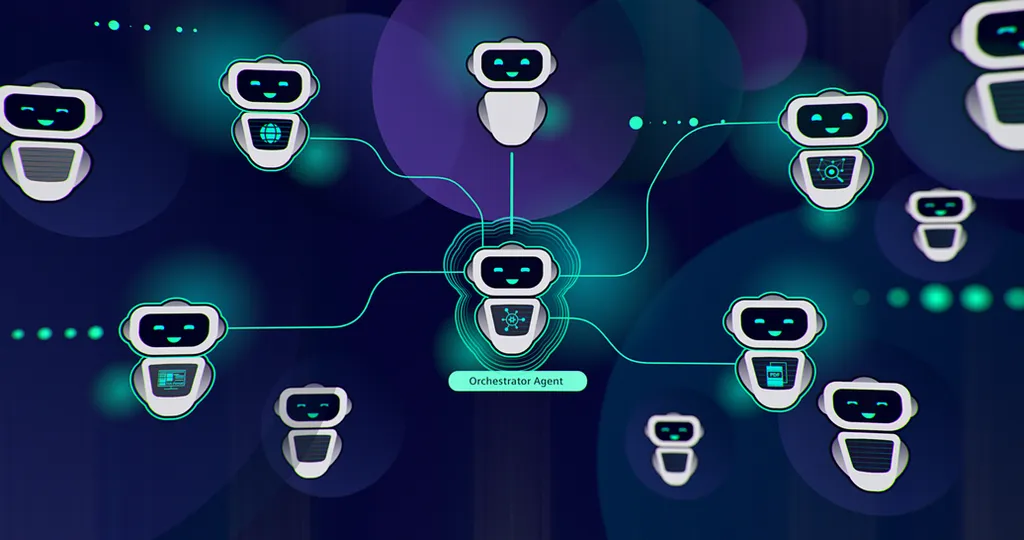
Agents like Manus (which we reviewed in depth here) can do something genuinely different: they can think ahead, coordinate across tasks, and make decisions without waiting for you to tell them what to do next.
That's not incremental improvement. That's a phase change.
And here's what's wild: most people are still treating agents like they're just ChatGPT with extra steps.
They're not.
Part 1: What Agents Actually Do (And Why It's Freaking People Out)
Let me be specific about what's changed.
The Old Model (2023-2025): Task-Based AI
You had a problem. You opened an AI tool. You explained the problem. The tool gave you an answer. You took that answer and either used it or iterated on it.
Flow: Human → AI → Output → Human decision → Action
This model required constant human judgment. Which is why it took so long for people to adopt AI at scale. You had to be present.
The New Model (2026+): Agent-Based AI
You give an agent a goal. The agent:
- Breaks the goal into sub-tasks
- Gathers information it needs without asking
- Makes decisions about approach
- Tries multiple strategies if the first one fails
- Delivers a result
Flow: Human → AI → [AI handles everything] → Output → Human reviews
The human is still in control (theoretically). But they're much further from the actual work.
And here's where people get scared: what if the human stops showing up at all?
Part 2: Who's Actually Going to Lose (And It's Probably Not Who You Think)
This is where I need to be real with you.
Some jobs will disappear. Not in some theoretical future. In the next 18 months.
Jobs that are likely to contract:
- Junior copywriters doing commodity work (blog posts, email sequences, ad copy)
- Data analysts doing routine reporting and dashboard building
- Customer service reps handling scripted interactions
- Basic graphic designers doing template-based work
- Junior developers writing boilerplate code
But here's the thing: these jobs weren't exactly thriving already. They were already the first to get outsourced, underpaid, and automated.
Jobs that are NOT going away:
- People who understand strategy (what to build, who to build it for, why it matters)
- People who can evaluate AI output (because agents make mistakes)
- People who understand context (the business, the market, the customer psychology)
- People who can direct agents (knowing what to ask for)
- People who can combine multiple systems into workflows
This is the crucial insight: the job itself isn't disappearing. The task is.
If you're a copywriter who's spent three years just writing blog posts to order, you're vulnerable. If you're a copywriter who understands messaging strategy, audience psychology, and brand positioning, you're essential. Now you just use agents to execute faster.
If you're a designer who's good at making things look pretty according to a brief, you're vulnerable. If you're a designer who understands why design works and can direct AI-generated designs toward actual business outcomes, you become exponentially more valuable.
Part 3: The Agent Problem That Everyone's Missing
Now, I need to talk about something that most people aren't discussing yet because agents are still so new.
Agents are powerful. But they're also dumb in ways that are hard to predict.
They're like hiring the world's most impressive employee who has zero common sense and zero business judgment.
The Problem: Agents Optimize for the Wrong Things
Give an agent the goal "increase blog traffic" without clarity, and here's what it might do:
- Write 50 mediocre posts (remember our article on quantity vs. quality?)
- Spam keywords until Google penalizes you
- Spend your entire AI budget generating content that gets zero engagement
- Optimize for vanity metrics (pageviews) instead of real metrics (leads, revenue)
This is exactly what happened with early automation tools. Companies got drunk on capability and forgot about strategy.
The Real Problem: The Brief Quality Crisis
Here's what separates people who'll thrive with agents from people who'll get run over:
The people who'll suffer: Those who hand an agent a vague goal and expect brilliance.
The people who'll win: Those who give agents a crystal clear, strategically sound brief.
Remember when we talked about prompt engineering and the RASCAL method?
That was preparation for this moment.
Because agent briefs are 10x more complex than prompt briefs. You're not just asking for a piece of content. You're setting parameters for:
- What success looks like (not pageviews — real metrics)
- What constraints exist (budget, brand guidelines, audience)
- What decisions the agent should make vs. what it should ask about
- How to handle edge cases and failures
Get this wrong, and agents amplify your mistakes at scale. Get it right, and they multiply your leverage.
Part 4: How the Competitive Landscape Changes in 2026
Let me paint a scenario:
Company A: Uses agents haphazardly. Generates tons of content. Sees no real traction. Spends a fortune on AI credits. Decides agents are overhyped.
Company B: Spends three months getting crystal clear on strategy. Then deploys agents within a narrow, well-defined scope. Sees 3x the output with 1/10th the budget waste.
By end of 2026, Company B has a competitive moat that's hard to copy. Not because they have better AI. Because they have better strategy.
The New Competitive Advantage: Direction
In 2015, the advantage was: "We have great writers."
In 2020, the advantage was: "We have great writers who understand AI tools."
In 2026, the advantage is: "We have people who can direct AI agents toward strategically important outcomes."
This skill — the ability to look at business problems, break them down, and articulate them clearly enough that an autonomous system can execute on them — is becoming the rare skill.
And here's the beautiful part: it's learnable. It's just not taught anywhere yet.
Part 5: The Uncomfortable Truth About Agents and Control
I need to talk about something that's haunting the back of everyone's mind: what if we lose control?
Not in a Terminator way. But in a "I gave an agent a goal, and it did technically what I asked but in a way I didn't intend" way.
This already happens. Companies using Manus AI for content generation have reported back with things like:
- An agent created 47 variations of the same blog post instead of 47 different posts
- An agent optimized for engagement by writing increasingly inflammatory takes
- An agent spent the entire budget running tests on a approach that fundamentally won't work
These aren't bugs. These are misaligned briefs.
The agent optimized for what you asked it to optimize for. You just didn't ask for the right thing.
The Framework for Agent Alignment
Here's what actually works (I've been testing this):
Step 1: Define the Real Goal
Not "increase traffic." Real goal: "Increase qualified leads from blog content by 40% in Q2, without increasing budget or compromising brand voice."
Notice: specific, measurable, bounded.
Step 2: Define Success Metrics
What will you actually measure? For the goal above:
- Leads from blog by source
- Lead quality (not just volume)
- Cost per lead
- Conversion rate of those leads
- Customer sentiment about brand voice
Step 3: Set Hard Constraints
What CAN'T the agent do?
- Can't change our messaging pillars
- Can't post more than 3x per week
- Can't use AI-generated images (brand guideline)
- Can't sacrifice quality for speed
Step 4: Give It a Narrow Scope
Agents fail when given everything. They win when given something specific.
Instead of "run all my content strategy," give it: "write 12 blog posts on these 12 topics using the structure outline, then post them on schedule."
Step 5: Set Review Points
Agents shouldn't run unattended. Review:
- Every third output? (if low-stakes)
- Every output? (if high-stakes)
- Weekly summary of decisions made? (if medium-stakes)
When you set this framework, agents go from unpredictable to genuinely useful.
Part 6: The Tools That Actually Work for This
I need to be honest: not all agents are created equal. And most people are using the wrong tool for their situation.
If You Need Content Automation: Manus AI (But Read Our Review First)
We covered Manus deeply here, but the short version: Manus is legitimately impressive for content generation when you set it up correctly.
The catch: "correctly" means spending 2-3 weeks getting your briefs locked in before you unleash the agent.
Most people don't do this. Most people just… unleash it. Then wonder why it sucks.
If You Need Decision Support: Claude + Monica
Here's a weird thing that's become clear in 2026: the best "agent" isn't always the one built as an agent.
Claude through Claude.ai has extended thinking capabilities that make it phenomenal for working through complex problems. Monica lets you save conversations, layer context, and build on thinking over time.
Combined? You get something that functions like an agent (remembers context, makes decisions, chains reasoning) without the unpredictability of a full autonomous system.
This is perfect if you're in research, strategy, or anything where the work is thinking not doing.
If You're Building Workflows: Integration Tools + AI
The actual power move in 2026 is: Don't use an agent. Use an integration tool with AI plugged in.
Zapier, Make, and other workflow platforms now support AI models as steps in a workflow. This lets you:
- Automate specific, bounded tasks
- Keep humans in the loop for decisions
- See exactly what's happening at each step
- Scale predictably
This is less "sexy" than "AI agent does everything" but it's 100x more reliable for actual business.
Part 7: What You Should Actually Be Doing in March 2026
If you're reading this thinking "okay Thomas, so what do I do now?" here's my actual advice:
Month 1: Audit and Clarify
Look at your current work. What's:
- High-leverage (impacts business significantly)
- Well-understood (you could explain the logic to someone)
- Repeatable (you do it consistently)
- Annoying to do manually (the main reason you want to automate)
Only automate work that hits all four. Everything else, leave manual.
Month 2: Build Your Briefing Muscles
Start writing briefs like your life depends on it. Use the RASCAL method from our prompt post, but expand it to agent-level complexity.
Write down:
- What the agent is responsible for
- What decisions it CAN make vs. what it escalates to you
- How it measures success
- What it absolutely cannot do
- How often you'll review its work
Practice this on smaller AI tools first. Get good at briefing before you deploy agents.
Month 3: Deploy Cautiously
Start with one agent, one narrow task, one metric to track.
Don't try to automate everything. Automate one thing. Get it working. Prove the value. Then expand.
This is boring. It's also the only way people are actually succeeding with agents right now.
Part 8: The Mindset Shift That Matters
Here's the real talk that nobody wants to hear:
Your job in 2026 isn't to be the person who does the work. It's to be the person who directs the work.
This is genuinely hard for a lot of people.
Writers are trained to write. Designers are trained to design. Developers are trained to code.
Now you need to learn a different skill: understanding enough about work to specify it to an AI system.
And that skill? It requires:
- Clarity of thinking (what am I actually trying to accomplish?)
- Business sense (does this move the needle?)
- Communication (can I articulate this so a system understands?)
- Judgment (is this output good? Is it safe? Does it align?)
These aren't AI skills. They're ancient skills. The skills that have always separated junior people from senior people.
Agents are just making that difference more obvious.
Part 9: The Overlooked Opportunity
Here's what I'm genuinely excited about for people positioning themselves right now:
The agent era creates genuine leverage for small teams.
If you're a one-person business or a three-person startup, agents let you punch at the weight of a 10-person operation. Not because you're doing more work. But because you're directing computational work alongside human work.
A freelancer with one good agent can serve 3x more clients.
A solopreneur can run a sophisticated content operation.
A small agency can deliver output that used to require a large department.
The catch: you have to be good at briefing and directing.
If you're not? Agents just amplify your chaos.
Part 10: The Future Is Hybrid
By end of 2026, here's what I think the winners look like:
They're not 100% agent-driven. That leads to mediocrity at scale.
They're not 0% agent-driven. That's leaving leverage on the table.
They're hybrid:
- Humans for strategy, judgment, creativity
- Agents for execution, iteration, optimization
- Integration tools for coordination between human and agent work
- Strong monitoring to make sure everything stays aligned
This requires a different rhythm of work:
- Big-thinking sessions → create briefs → deploy agents → review outputs → iterate
Not:
- Do task → feel exhausted → do next task
It's actually less exhausting. But it requires a different mindset.
Your Real Challenge This Month
Stop overthinking whether agents are good or bad. They're just tools.
Instead, focus on this: Can you articulate what you actually want well enough that a system could execute it?
This is the real skill for 2026.
Take one thing you do regularly. Write out the perfect brief for an agent to do that task. Make it specific. Make it clear. Make it measurable.
Then try it. Either use Manus, or just give Claude and Monica an ambitious goal.
See what happens. You'll learn more in one week than from reading about agents for a year.
Related Posts From ChainRiot
Want to go deeper?
- Manus AI Review (2026): The Ultimate Autonomous Agent or a Credit-Hungry Hype Machine? – The detailed breakdown of the most popular agent right now.
- The AI-Powered Content Marketer's Dilemma: Your Tools Are Smarter Than Your Strategy – Why having the best AI doesn't matter if you don't have strategy.
- You're Using AI Wrong — Here's How to Write Prompts That Actually Work – Master prompt engineering before you deploy agents.
- Monica Chatbot Review (2026): The AI Assistant That Actually Learns What You Need – For building context-aware workflows with AI.
External Resources Worth Your Time
If you want to understand agents from people who aren't trying to sell them to you:
- Papers with Code – The actual research on how AI agents work
- The Alignment Problem – Deep dive on why agent alignment matters (and yes, it's a real issue)
- Anthropic's Constitutional AI Research – What companies are doing to make agents more reliable
- A16Z's AI Playbook – Business perspective on AI automation
- Scale.com's Reports – Real data on how enterprises are using AI agents
The Reality Check
I'll be honest: agents in 2026 are exciting and overhyped in equal measure.
The exciting part: they work. When you set them up right, they deliver leverage that compounds.
The overhyped part: they're not magic. They require clear thinking, good strategy, and constant oversight.
The people panicking about job losses? They're right to be concerned if they don't adapt. But "adapt" doesn't mean learn to code. It means learn to think strategically and articulate what you want.
The people thinking agents will replace them? They're wrong. Agents will replace tasks. People who evolve? They become exponentially more valuable.
This post contains affiliate links. The Monica link is my genuine recommendation — I use it daily and the memory features are legitimately game-changing for anyone doing complex AI work.
Share this with someone who's stressed about AI taking their job. They need the real perspective, not the hype.
Comments
Post a Comment